
Forgejo v17.0 is available
Forgejo version 17.0 was released on 15 October 2026. Forgejo is a lightweight, community-developed, self-hosted platform for code collaboration.
This article contains a selection of the changes that were introduced. A complete list of changes is available in the release notes.
A dedicated test instance is available to try it out. Before upgrading, it is strongly recommended to make a full backup as explained in the upgrade guide and carefully read all breaking changes from the release notes. If in doubt, do not hesitate to ask for help in the chat room.
Breaking changes
Absolute links in rendered documents
In rendered documents, absolute links to resources inside a repository are now resolved with respect to the root of the repository (!12939).
This is a breaking change from the previous behaviour when these links were rendered using the root of the instance. Absolute links in issue and pull request descriptions and comments remain rendered with respect to the instance’s root (!13993).
This change increases the compatibility with other Git forges and thus, makes migrations to Forgejo even easier.
Action required
Deprecation of action run webhook events
Action run webhook events are replaced by the more capable and less problematic workflow run events (!14351). The action run events have been deprecated for removal in a future Forgejo version. Unfortunately, it is not possible to migrate existing webhooks to the new events automatically because some headers (X-*-Event, X-*-Event-Type) and the action key have changed, which might break existing receivers. Furthermore, completion notifications are only emitted after all jobs of a run have terminated (!12598).
Please inspect existing webhooks and manually migrate them to the workflow run events after verifying that the webhook receivers can process them without issues.
New features
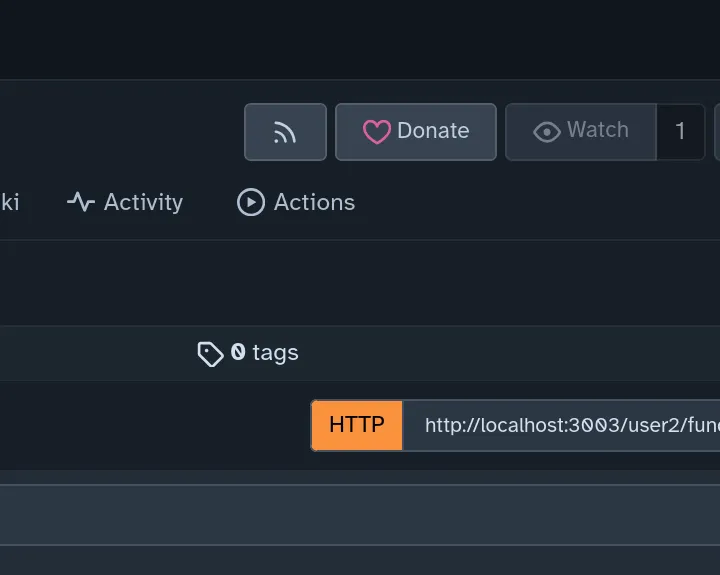
Support for FUNDING.yml
If a repository contains a FUNDING.yml file, Forgejo presents its contents in various contexts as donation options.
This feature currently exists only on the web interface, but we are also considering an API surface. See #14075 for details and to give feedback on this matter.
Auto-completion for issues and pull requests
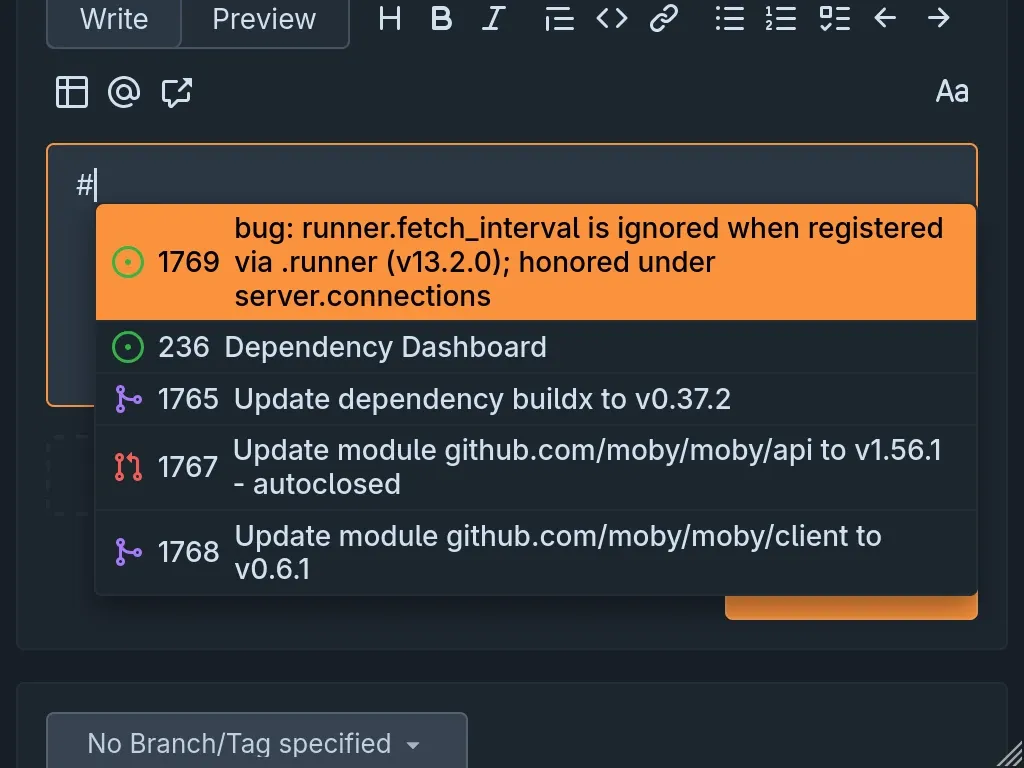
When authoring an issue, pull request, or comment, Forgejo will offer auto-completion for issues and pull requests (!8088). To activate the auto-completion, type # for issues or pull requests, or ! for pull requests only. To refine the suggestions, either continue with a search term or an issue or pull request number.
LFS support improvements
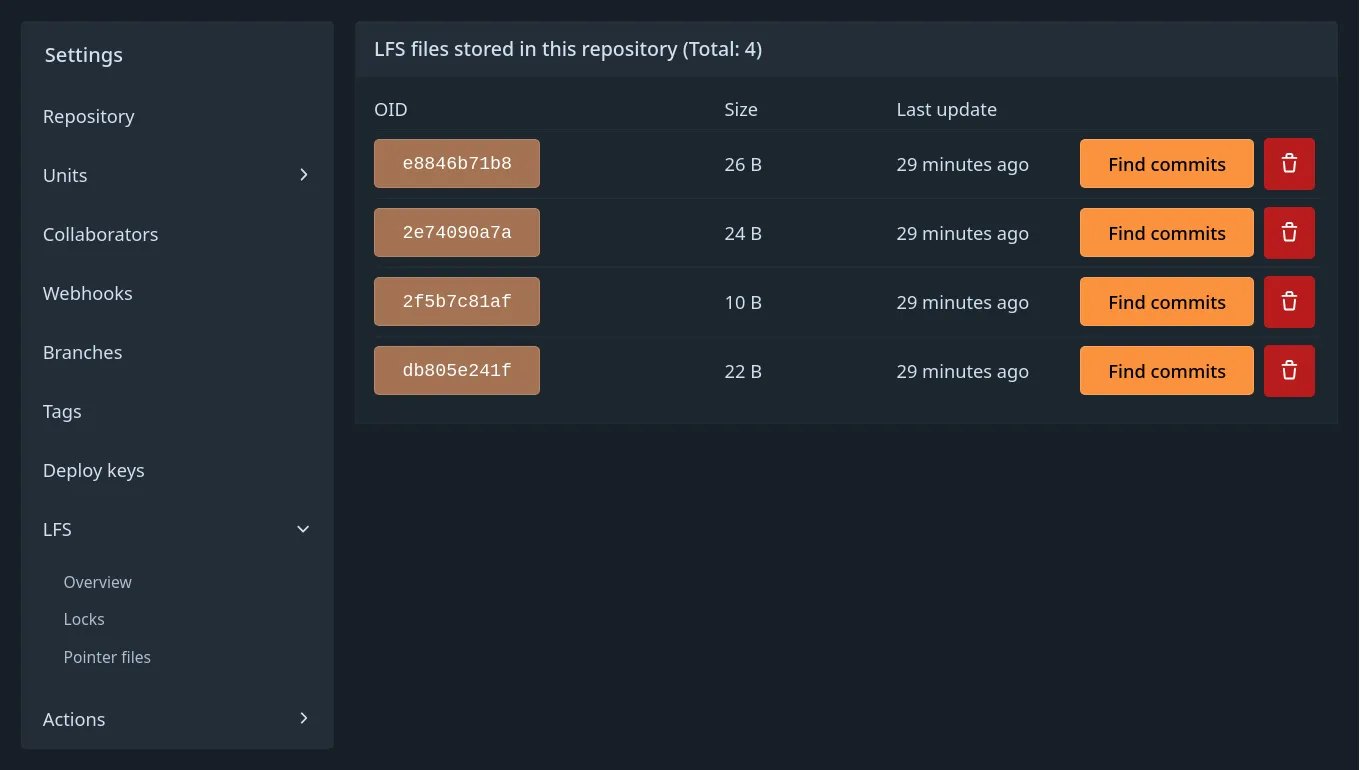
Forgejo supports repositories with Git LFS files. For a given repository, its owners can view and manage all Git LFS files associated with it. In preparation for further UI and backend changes that aim to improve Forgejo’s support of Git LFS, several improvements to the web frontend’s Git LFS views have been made—some are more easy to notice, whereas some others are details.
Invitations to organizations
Forgejo can be configured so that when adding a user to an organization, they are not added to the organization directly but instead get an invitation that they can accept or decline. This behavior can be enabled by setting ADD_MEMBERS_BY_INVITATIONS = true in Forgejo’s app.ini.
Those invitations are sent out by email and expire after 14 days by default. Authentication providers are still able to add users to organizations with no action on their part. Work is ongoing to make those invitations visible in the in-app notifications.
Forgejo Actions API improvements
The Forgejo HTTP API received multiple enhancements related to Forgejo Actions:
- Entire workflow runs and individual jobs can now be rerun by sending requests to
/repos/{owner}/{repo}/actions/runs/{run_id}/rerunand/repos/{owner}/{repo}/actions/jobs/{job_id}/rerunrespectively (!13924). The workflow runs or jobs must have completed. Otherwise, they cannot be rerun. However, individual completed jobs can be rerun while the workflow run is still being executed. - The HTTP endpoints for obtaining job logs gained substring filters (!12821) and the ability to only return the logs of a particular step with
/jobs/{job_id}/logs?step=N(!12799). In addition to plain text, the logs can be requested as NDJSON with?format=ndjson(!12820). /repos/{owner}/{repo}/actions/jobs/{job_id}enables users to get the details of a particular job (!12799).
Forgejo Actions job summaries
Forgejo now displays job summaries generated by Forgejo Runner 13.2 or newer (!14076).
Job summaries are Markdown documents that belong to a particular Forgejo Actions job. They are displayed above the logs. All Markdown features supported by Forgejo can be used — including tables, Mermaid diagrams, and formulas written in KaTeX.
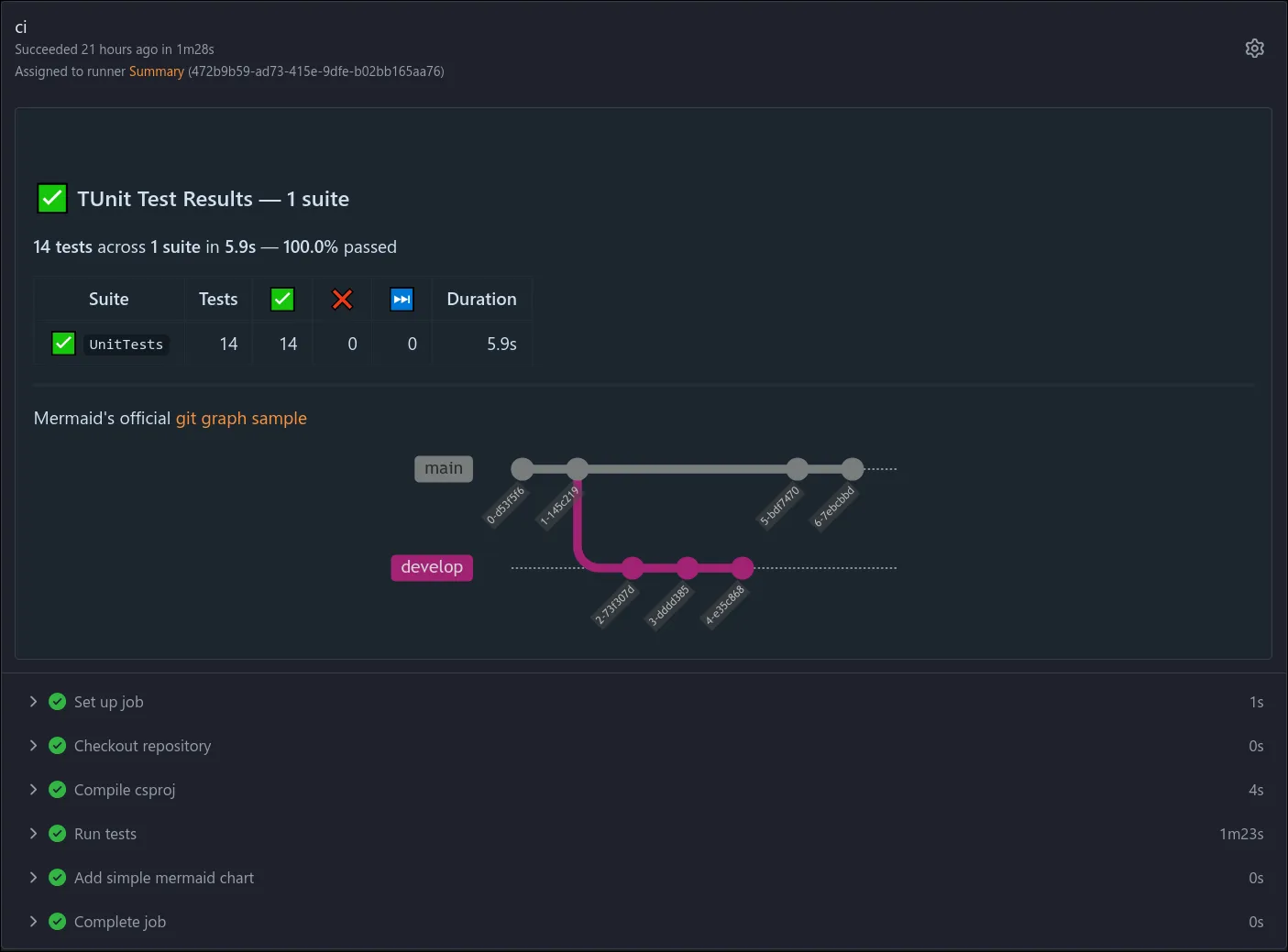
Job summaries are assembled from one or more Markdown fragments that are written by a step to the file $FORGEJO_STEP_SUMMARY. $GITHUB_STEP_SUMMARY is supported, too, for compatibility with existing actions and easing the transition from GitHub.
Allow pushing to AGit refs
Maintainers and pull-requests creators can now directly push to the AGit refs:
# Pull Request Creator
git checkout -b local-branch
git push origin HEAD:refs/for/main/agit-topic

# Maintainer/Reviewer can pull the code to a local branch
git fetch origin refs/pull/3/head:local-branch
git switch local-branch

# Maintainers and Pull Request creator need some further git config
git config push.default upstream
git config branch.local-branch.merge refs/pull/3/head
git config branch.local-branch.remote origin

# NEW: Maintainer and Pull Request creator can now (force) push and pull to this ref
git push
git pull
Webhook notifications for workflow jobs
More events have been added to Forgejo’s webhooks. Webhooks can now be triggered when the status of a Forgejo Actions workflow job changes (!14334). As usual, it is possible to receive notifications in various chat applications like Discord or Matrix. Alternatively, Forgejo is able to notify a remote server using an HTTP request. Users have the possibility to select which statuses, like “waiting” or “cancelled,” they want to receive notifications for.
While prior versions of Forgejo could already trigger notifications for “action runs,” that capability was limited to completion events. It has been enhanced to match the capabilities of workflow job events (!14351). Users can now select which statuses they want to receive notifications for. The old “action runs” events have been deprecated and will be removed in a future Forgejo version.
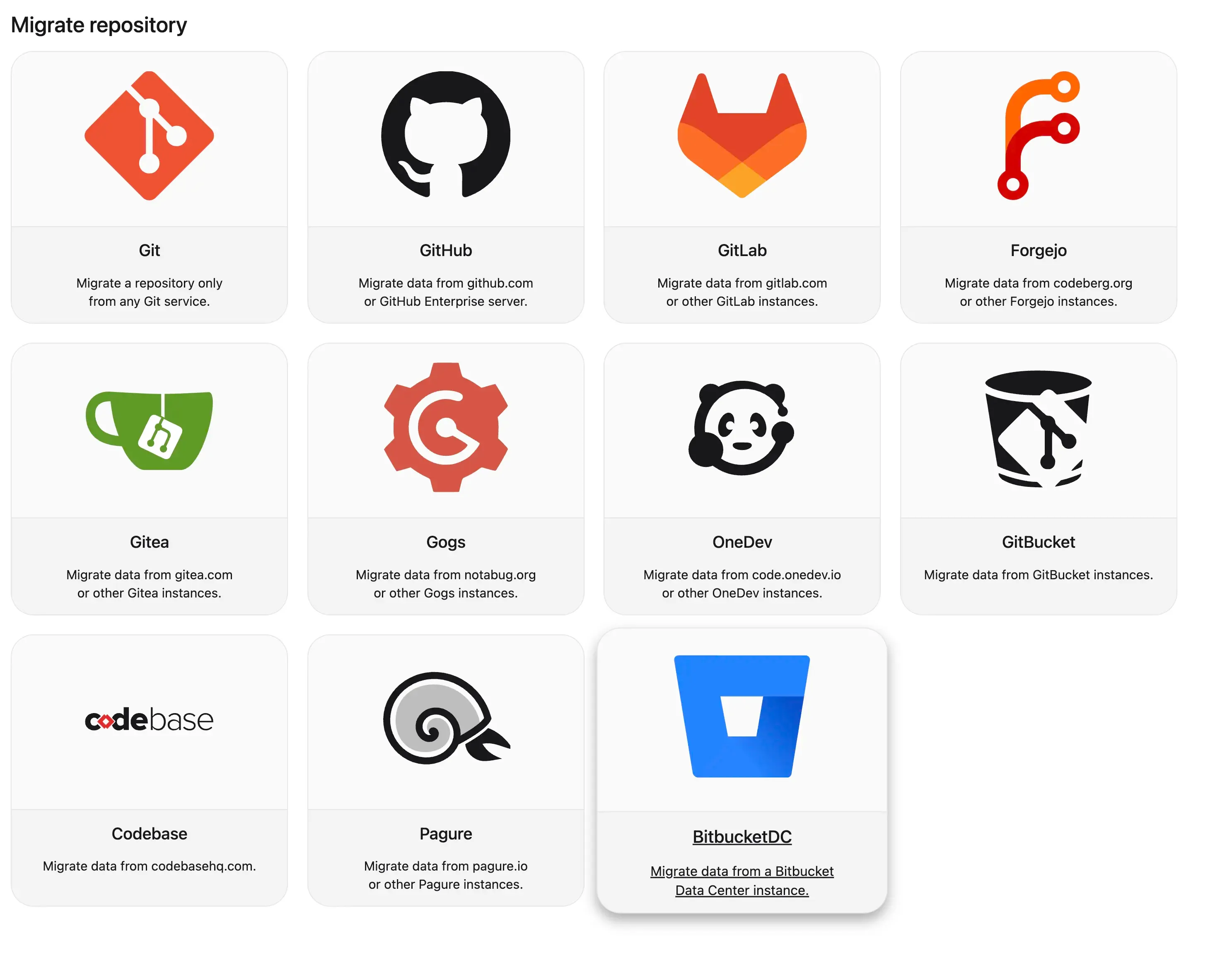
Repository migration from Bitbucket Data Center
Forgejo can now migrate repositories from Bitbucket Data center (formerly Bitbucket Server). Pullrequests, reviews, comments (including multi-line comments), threads replies can also be imported during the process. Authentication uses an HTTP access token, and “HTTPS SCM Hosting” must be enabled on Bitbucket as Forgejo migrations clone over HTTPS.
Release schedule and Long Term Support
Based on the release schedule, major releases are published every three months. Patch releases are published more frequently, depending on the severity of the bug or security fixes they contain. Forgejo v17.0 is a non-LTS release. It will be supported until 28 January 2027.
| Version | Release date | End Of Life |
|---|---|---|
| 15.0 (LTS) | 16 April 2026 | 15 July 2027 |
| 16.0 | 16 July 2026 | 29 October 2026 |
| 17.0 | 15 October 2026 | 28 January 2027 |
| 18.0 | 14 January 2027 | 29 April 2027 |
| 19.0 (LTS) | 15 April 2027 | 13 July 2028 |
17.0-test daily releases
Releases are built daily from the latest changes found in the v17.0/forgejo development branch. They are deployed to the https://v17.next.forgejo.org instance for manual verification in case a bug fix is of particular interest ahead of the next patch release. It can also be installed locally with:
Their names are staying the same, but they are replaced by new builds every day.
Get Forgejo v17.0
See the download page for instructions on how to install Forgejo.
Upgrading
Carefully read the breaking changes section of the release notes.
The actual upgrade process is as simple as replacing the binary or container image
with the corresponding Forgejo binary
or container image.
If you’re using the container images, you can use the
17.0 tag
to stay up to date with the latest 17.0.Y patch release automatically.
Make sure to check the Forgejo upgrade documentation for recommendations on how to properly back up your instance before the upgrade.
Contribute to Forgejo
If you have any feedback or suggestions for Forgejo, do not hold back; it is also your project. Open an issue in the issue tracker for feature requests or bug reports, reach out on the Fediverse, or drop into the Matrix space (main chat room) and say hi!
Donate
Forgejo is proud to be funded transparently. Additionally, it accepts donations through Liberapay. It is also possible to donate to Codeberg e.V. in case the Liberapay option does not work out for you, and part of the funding is used to compensate for work on Forgejo.
However, the Liberapay team allows for money to go directly to developers without a round-trip to Codeberg. Additionally, Liberapay allows for a steady and reliable funding stream next to other options, a crucial aspect for the project. The distribution of funds through Liberapay is transparently controlled using the decision-making process, and Forgejo contributors are encouraged to consider applying to benefit from this funding opportunity.
Thank you for using Forgejo and considering a donation, if your financial situation allows.